Cable Car Museum
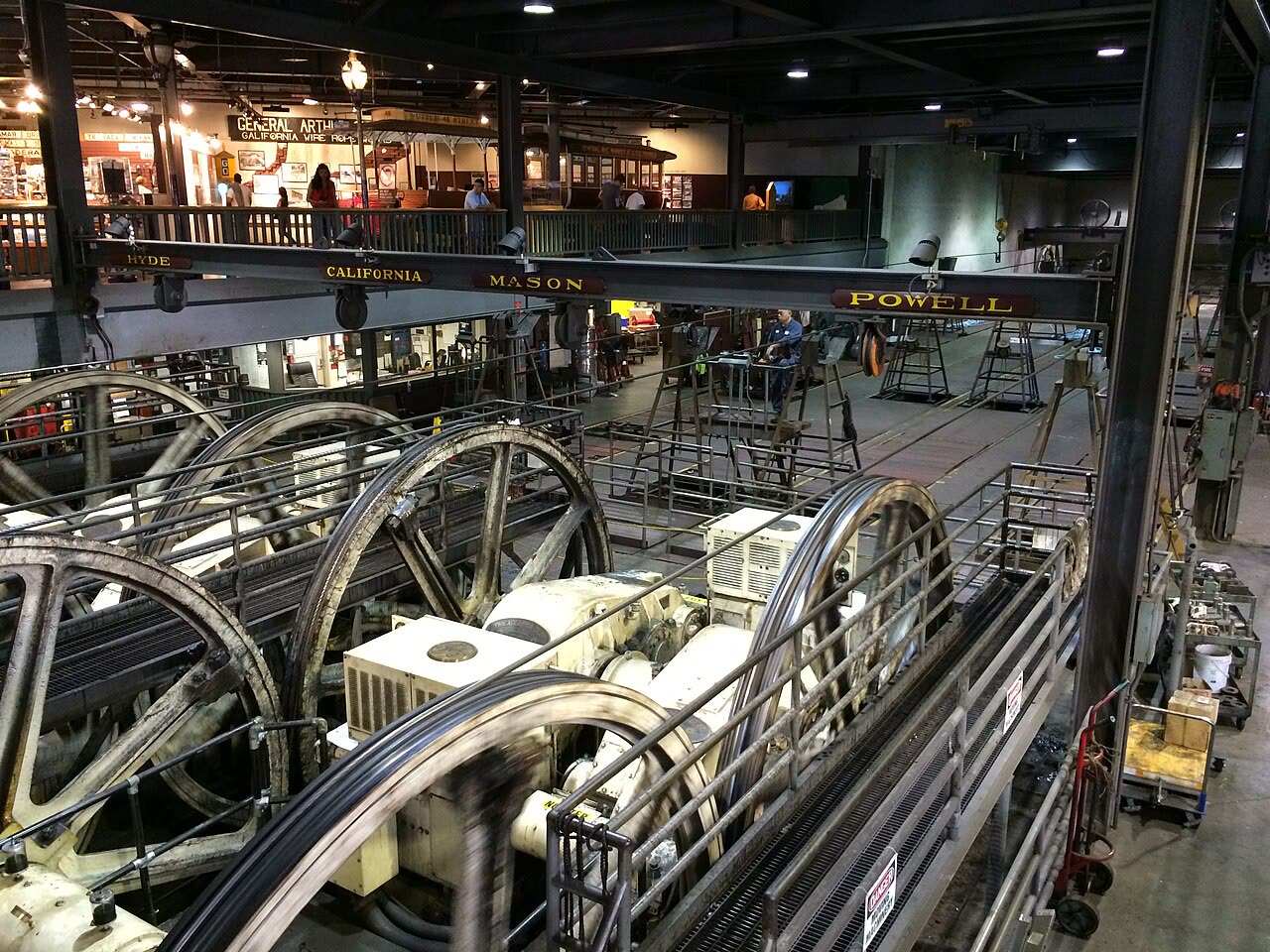
The beating heart of the cable cars: the cables under the streets are still pulled from here
The story
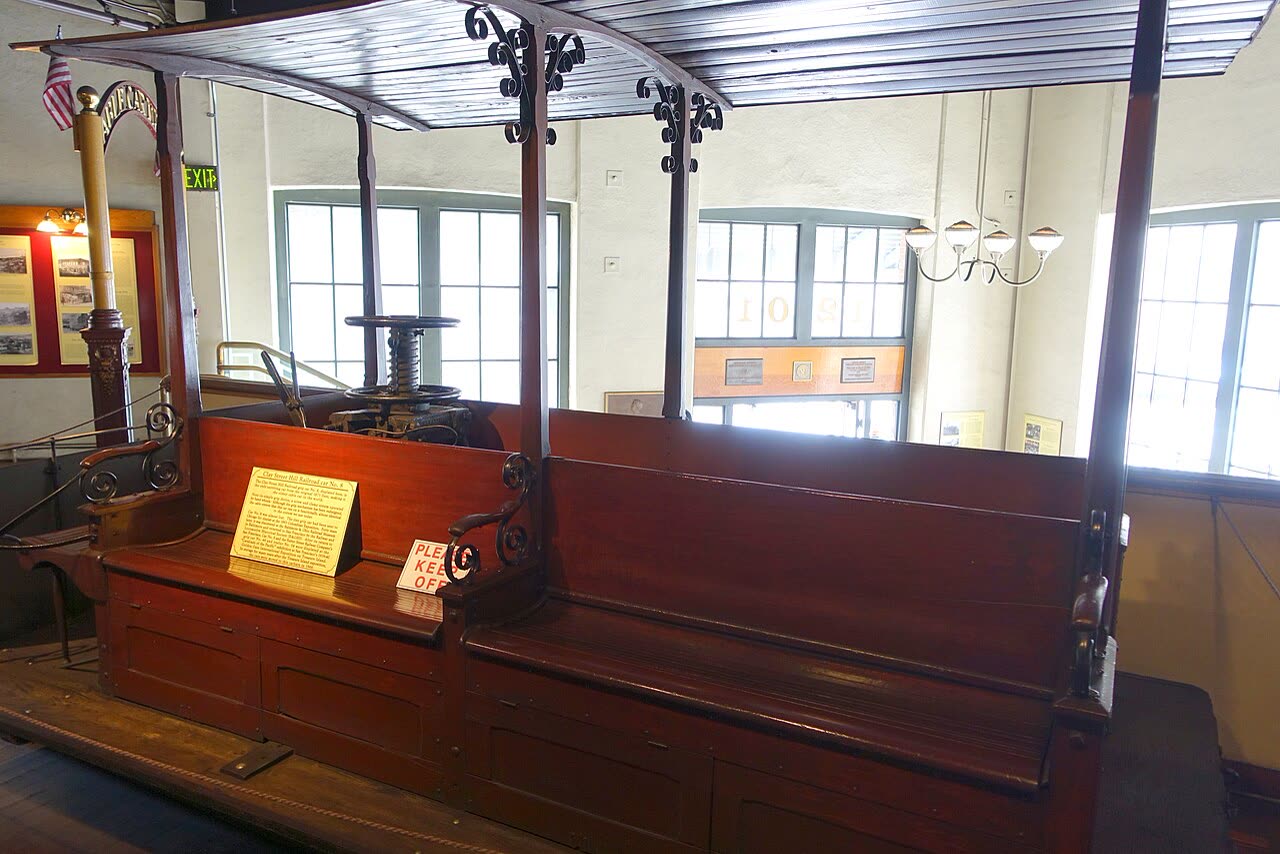
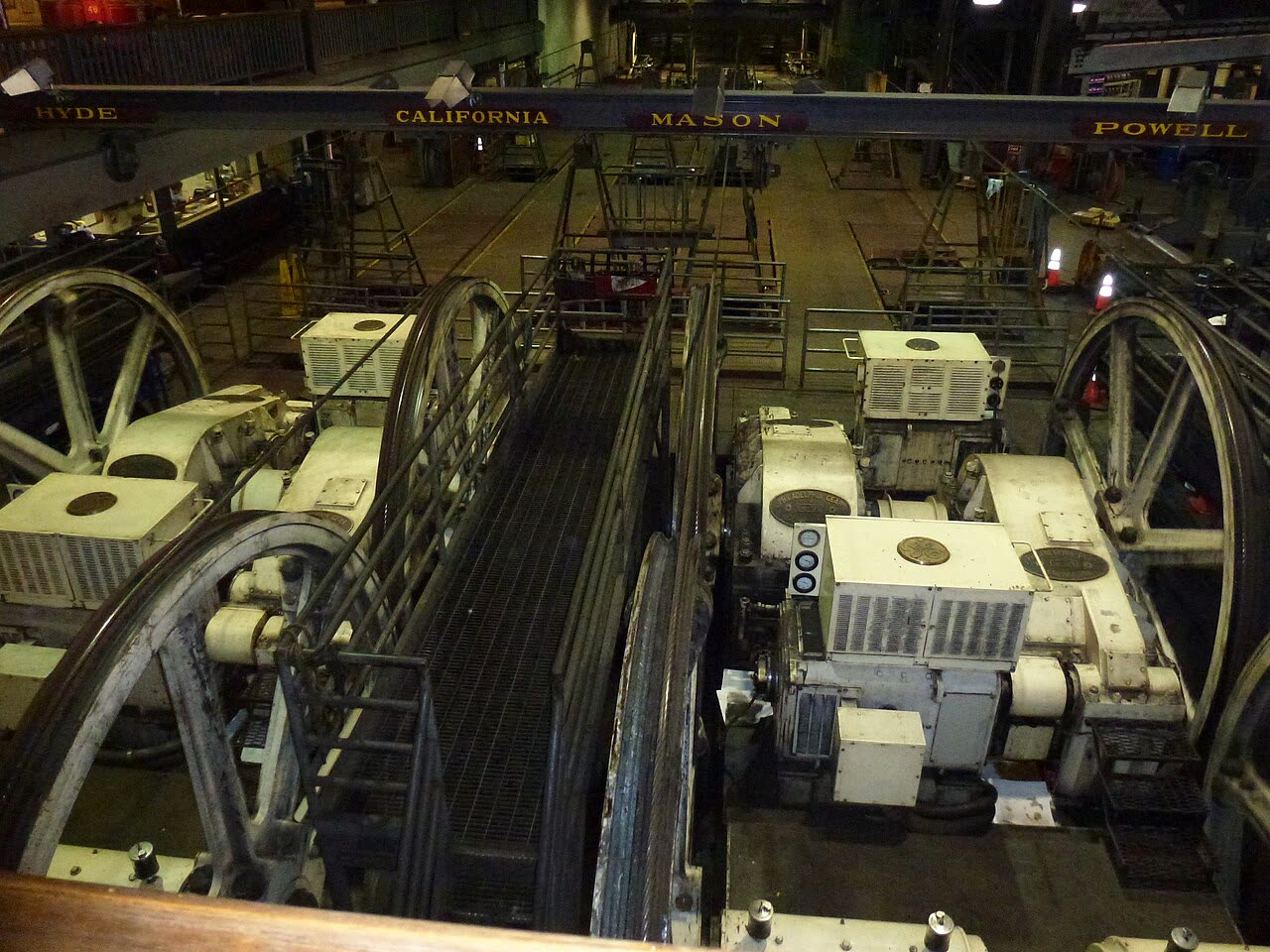
Before you is the cable car barn and powerhouse, and a free museum as well. The cable car was invented by Andrew Hallidie. In 1869 he watched horses pulling a horsecar up wet cobblestones on Jackson Street. As the story goes, the horses slipped and the car dragged them back down. Hallidie decided that on these hills the cars should be pulled by a cable. At four in the morning on the second of August 1873, the first car ran on Clay Street. The idea caught on. Eight companies laid fifty-three miles of track across the city. A steel cable runs without stopping under the street. The gripman grabs it with a special grip, and the car moves; he lets go and applies the brakes, and the car stops. All the cables are driven from here. From the museum balcony you can see the huge wheels that pull them, and downstairs, the spot where the cables run out under the street. In 1947 the mayor wanted to get rid of the cable cars. A San Franciscan, Friedel Klussmann, formed a committee, and the voters saved them. Since 1954 three lines have remained. In 1964 the cable cars were named a National Historic Landmark. The museum holds three cars from the 1870s. One of them, Clay Street car number eight, is the only survivor from the very first company.
Visiting
1201 Mason Street, at Washington Street. Free admission. Tuesday to Thursday 10:00–16:00, Friday to Sunday 10:00–17:00. Closed Mondays, New Year’s Day, Thanksgiving, and Christmas. Phone: +1 415 474 1887.
Photos
Sources
- Cable Car Museum — Heritage
- Cable Car Museum — The Museum
- Cable Car Museum — Information
- SFMTA — Cable Cars
- SFMTA — How Friedel Klussmann Saved Cable Cars 70 Years Ago
This text was written by AI from open sources. An expert will still check it. Found a mistake? Write to us. Support