Grand Central Terminal
A station with a starry sky on its ceiling, saved from demolition with help from Jacqueline Kennedy Onassis
The story
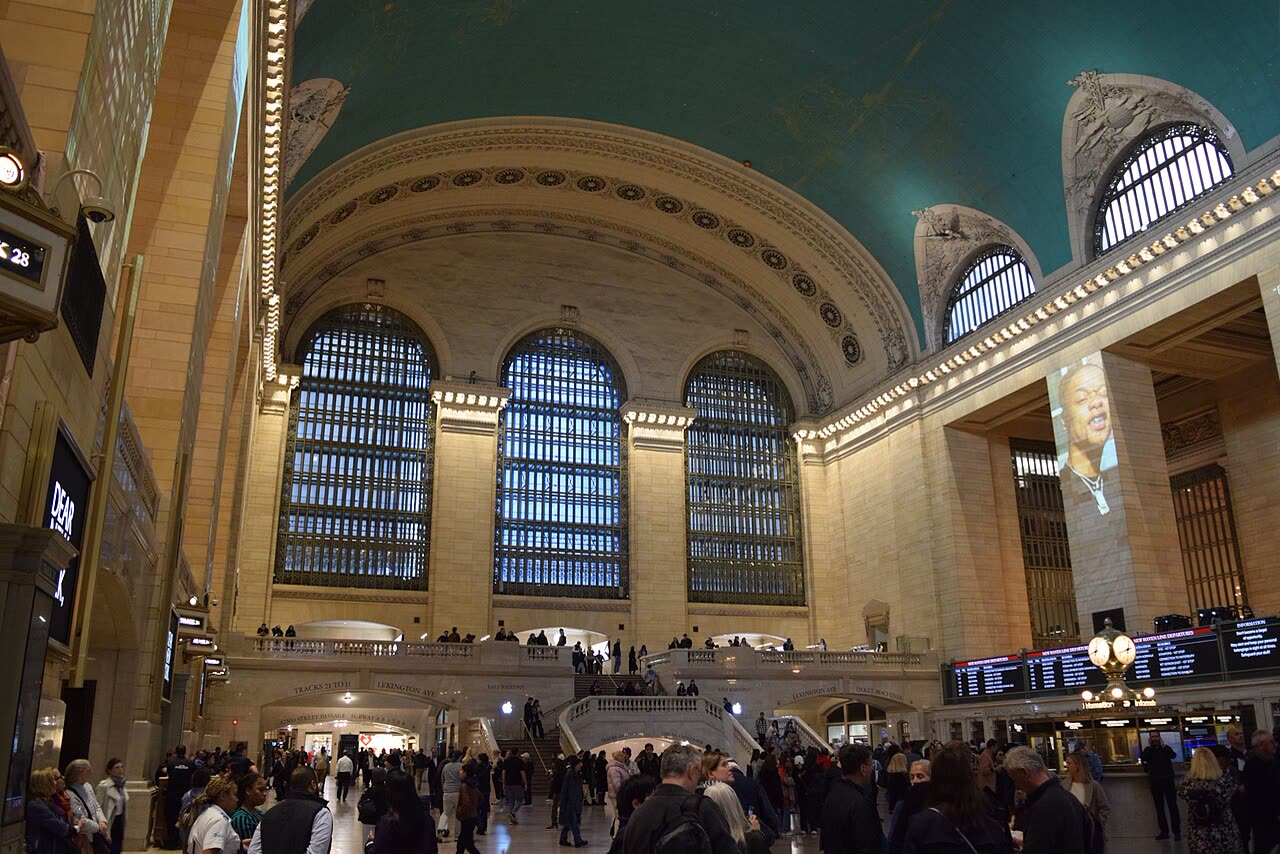
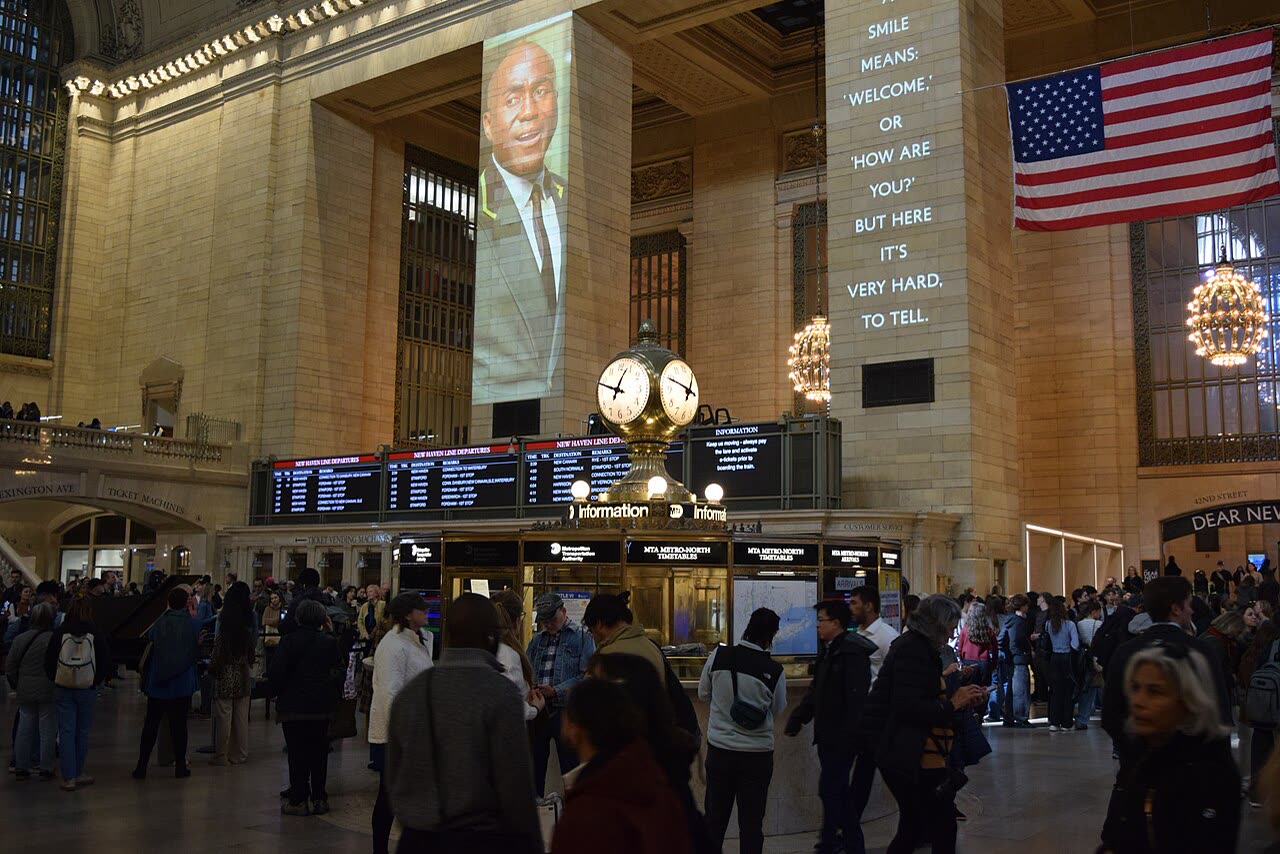
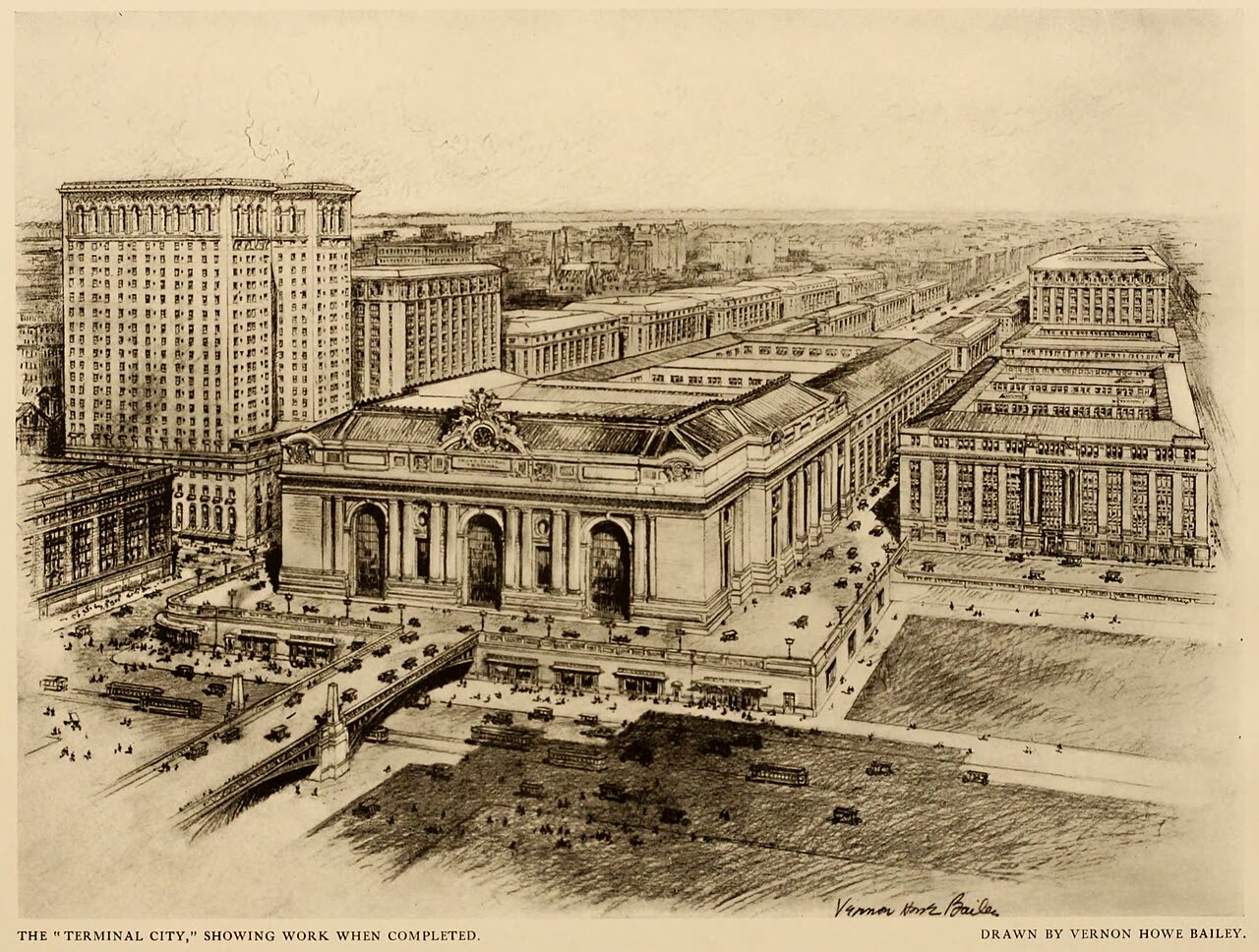
Before you is Grand Central Terminal. It opened at one minute past midnight on Sunday, the second of February 1913. More than a hundred and fifty thousand people came on the first day. Walk into the Main Concourse and look up. On the green ceiling are twelve constellations of the zodiac in gold leaf and two thousand five hundred stars. Fifty-nine of them light up. Look closely: the sky is painted backwards, the constellations are mirror images. In the middle of the hall stands the information booth with its round opal glass clock. “Meet me at the clock!” is how New Yorkers arrange to meet. All the clocks in the terminal are set by the atomic clock of the U.S. Naval Observatory. Downstairs is the Whispering Gallery, its vaults lined with Guastavino tile. Stand in one corner and have a friend stand in the opposite one, and you will hear their whisper across the room. In the 1960s the terminal nearly died. In 1967 the city named it a landmark. But in 1968 there was a plan to build a fifty-five-story tower above it and demolish part of the Main Concourse. New Yorkers stood up for the terminal, Jacqueline Kennedy Onassis among them. The fight went all the way to the U.S. Supreme Court. In 1978 the court ruled that the city had the right to protect its landmarks. In 1998 restoration began, starting with cleaning the grime off the Main Concourse ceiling.
Visiting
89 East 42nd Street, at Park Avenue. Entry to the terminal is free. Restaurants and the Whispering Gallery are below the Main Concourse. Tours and information are on grandcentralterminal.com.
Photos
Sources
- Grand Central Terminal — History (New York Transit Museum)
- Grand Central Terminal — What to See
- Justia, U.S. Supreme Court — Penn Central Transportation Co. v. New York City, 438 U.S. 104 (1978)
This text was written by AI from open sources. An expert will still check it. Found a mistake? Write to us. Support