Solomon R. Guggenheim Museum
Frank Lloyd Wright’s only major building in New York: a spiral museum where you see the art on the way down
The story
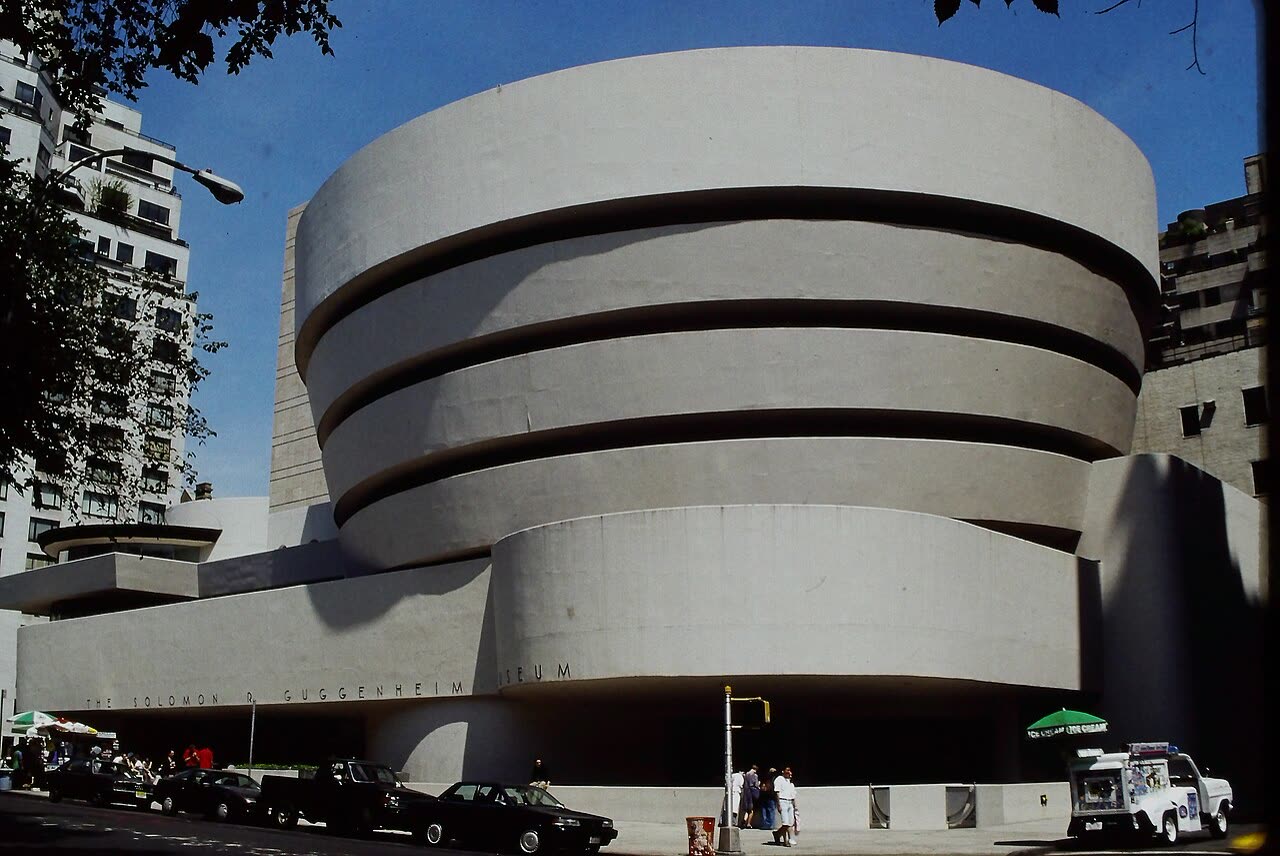
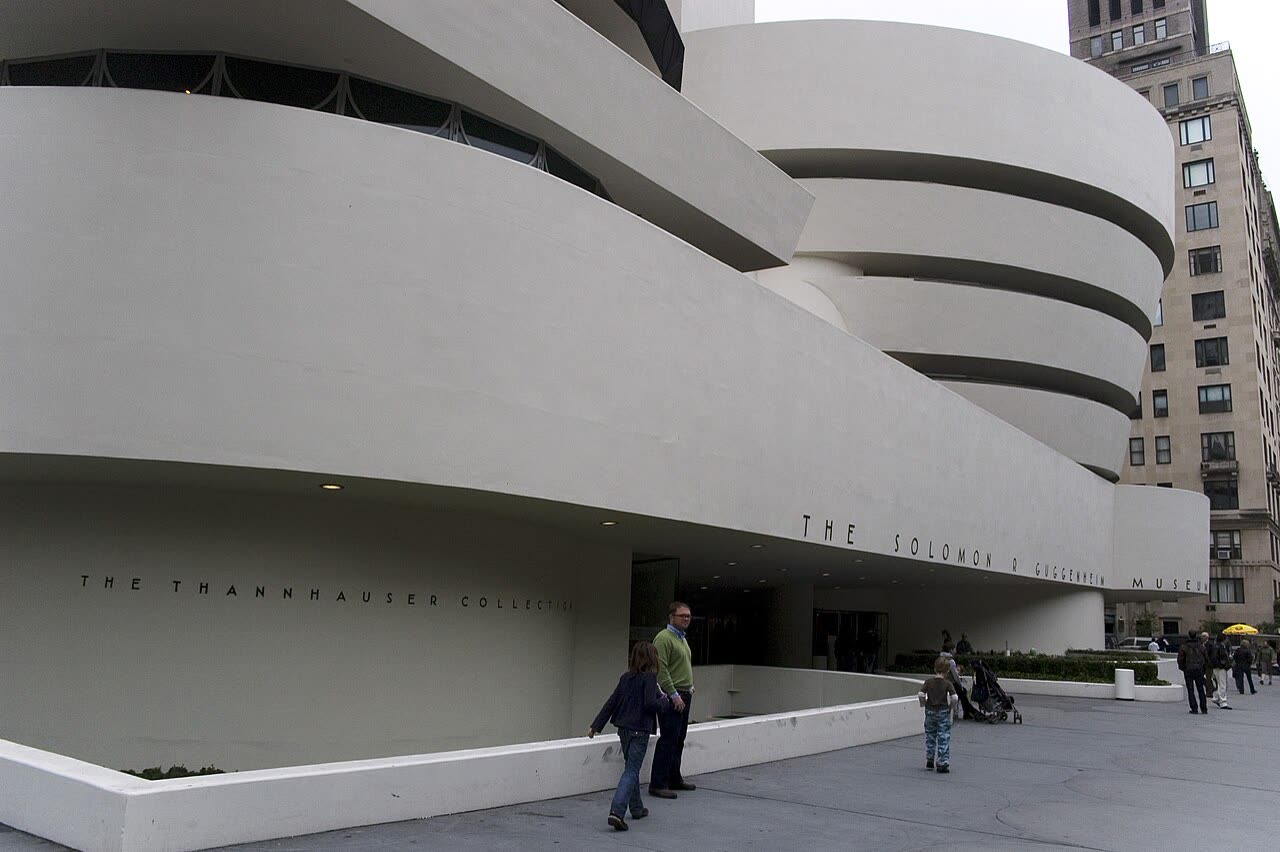
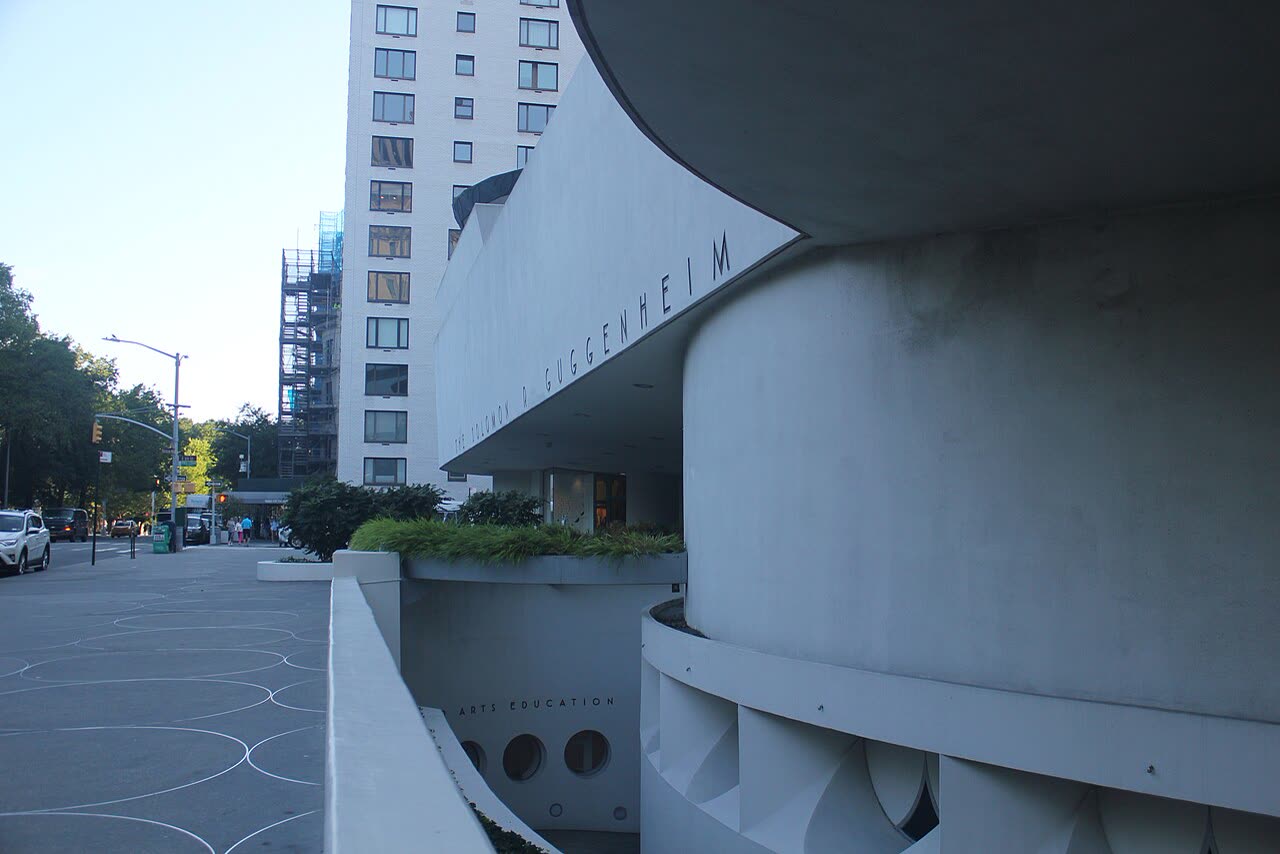
Before you is the Solomon R. Guggenheim Museum. The Guggenheim family made its fortune in mining. Solomon first collected Old Masters, but the painter Hilla Rebay won him over to non-objective, abstract art. In 1937 he set up a foundation, and on the thirty-first of May 1939 he opened the Museum of Non-Objective Painting on 54th Street. In 1943 Rebay persuaded him to commission a new building from Frank Lloyd Wright, America’s leading architect. Wright called the design “My Pantheon.” Things moved slowly. Guggenheim died in 1949 without seeing the museum. Construction began only in 1956, and the museum opened in October 1959. Wright did not live to see it: he died in April of that year, six months before the opening. Sixteen years passed between Wright’s first involvement and the opening day. From the outside the building looks like a white ribbon curled into a spiral, narrower at the bottom and wider at the top. Its round form was meant to break the straight street grid and echo the nature of Central Park across the avenue. Inside, a ramp 1,416 feet long winds upward. Wright’s idea was that visitors would take the elevator to the top and walk down, looking at the art. It is Wright’s only major building in New York. On its first Sunday more than sixteen thousand people came. In 2019 the museum and seven other Wright buildings were added to the UNESCO World Heritage List.
Visiting
1071 Fifth Avenue, at 88th Street. Open daily 10:30 a.m. to 5:30 p.m.; hours change on holidays. Admission is paid; it is best to book tickets in advance on the museum’s website. Subway: the 4, 5, 6 and Q lines.
Photos
Sources
- NYC Landmarks Preservation Commission — Solomon R. Guggenheim Museum (1990)
- Solomon R. Guggenheim Museum — Plan Your Visit
- UNESCO World Heritage Centre — The 20th-Century Architecture of Frank Lloyd Wright
- Wikipedia — Solomon R. Guggenheim Museum
This text was written by AI from open sources. Found a mistake? Write to us. Support