The High Line
A freight line above the streets that New Yorkers saved from demolition and turned into a long garden
The story
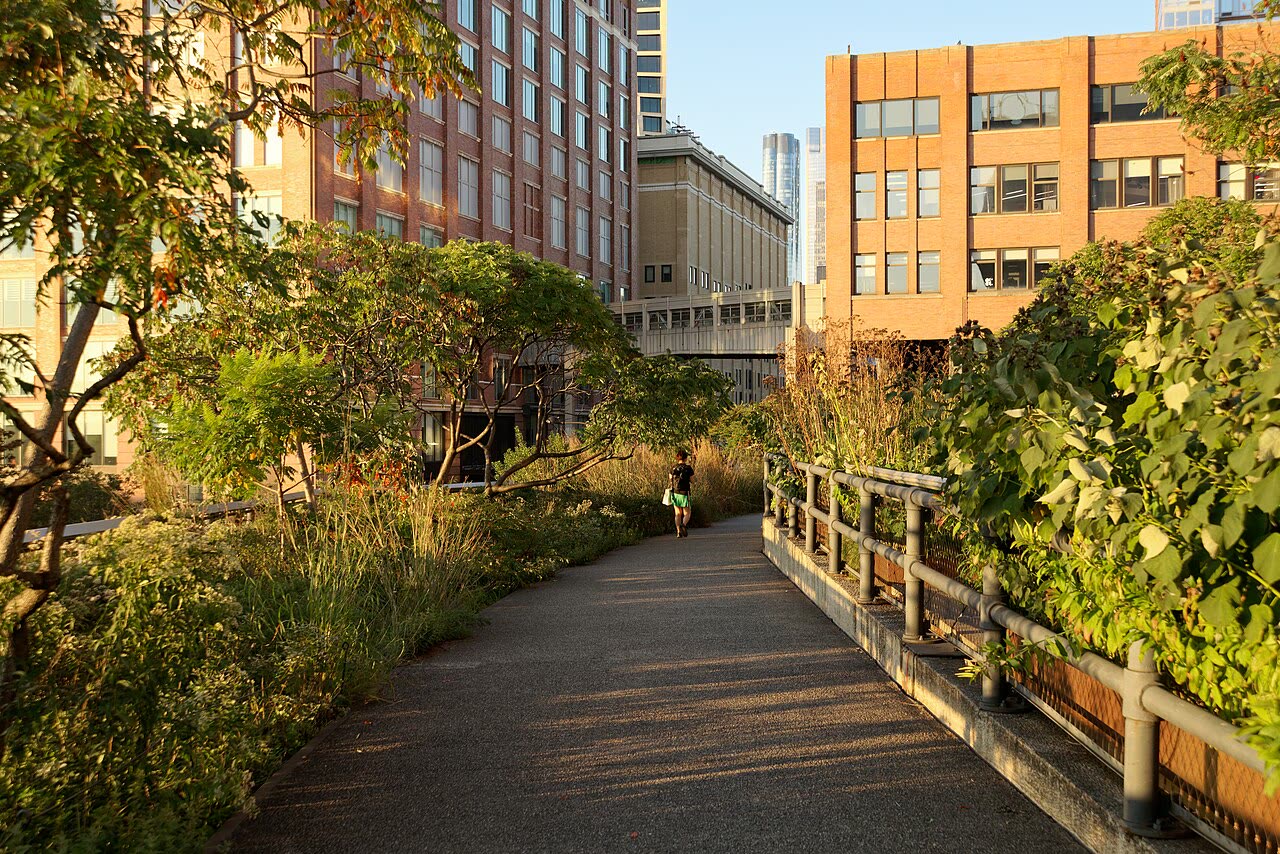
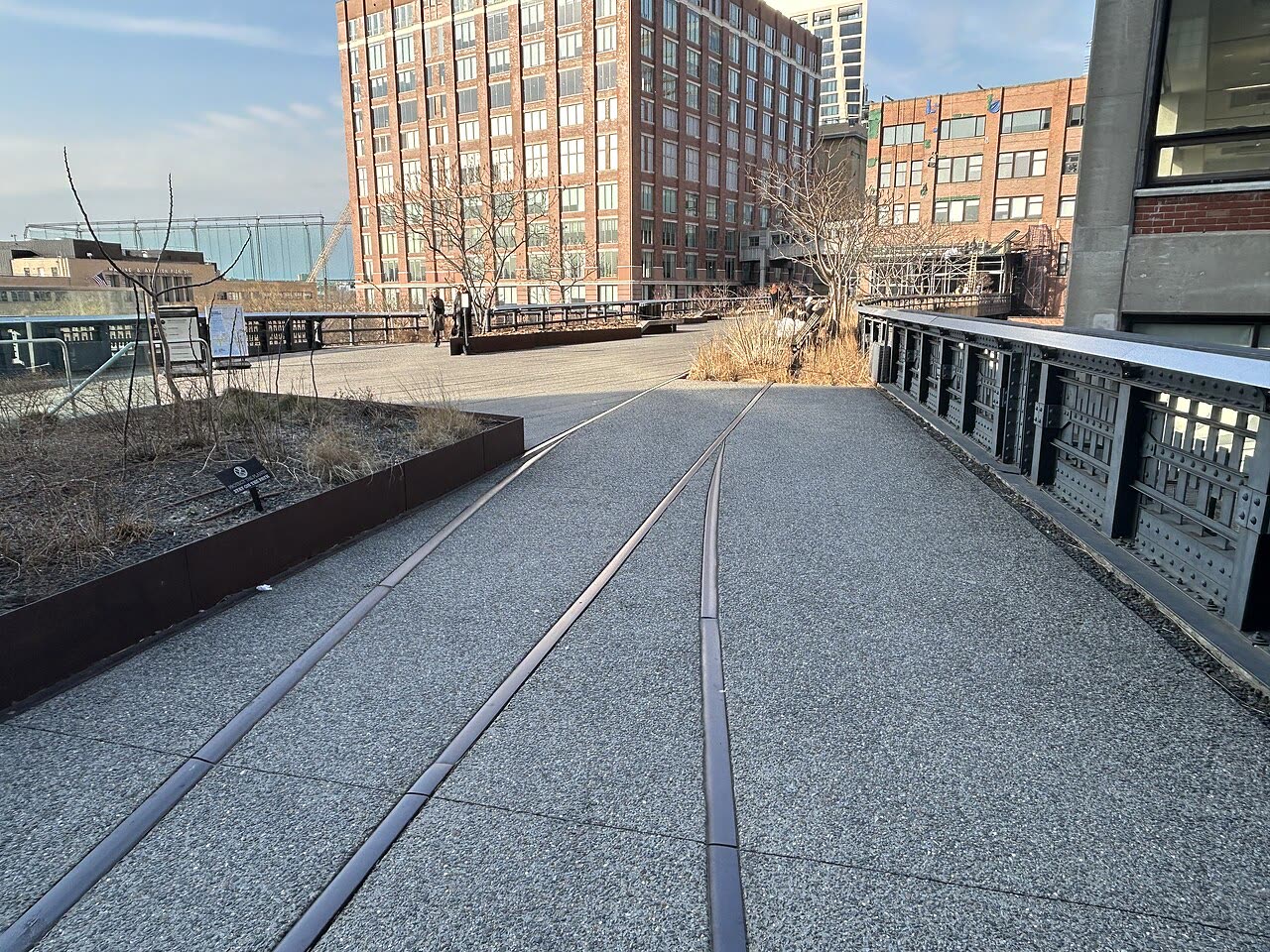
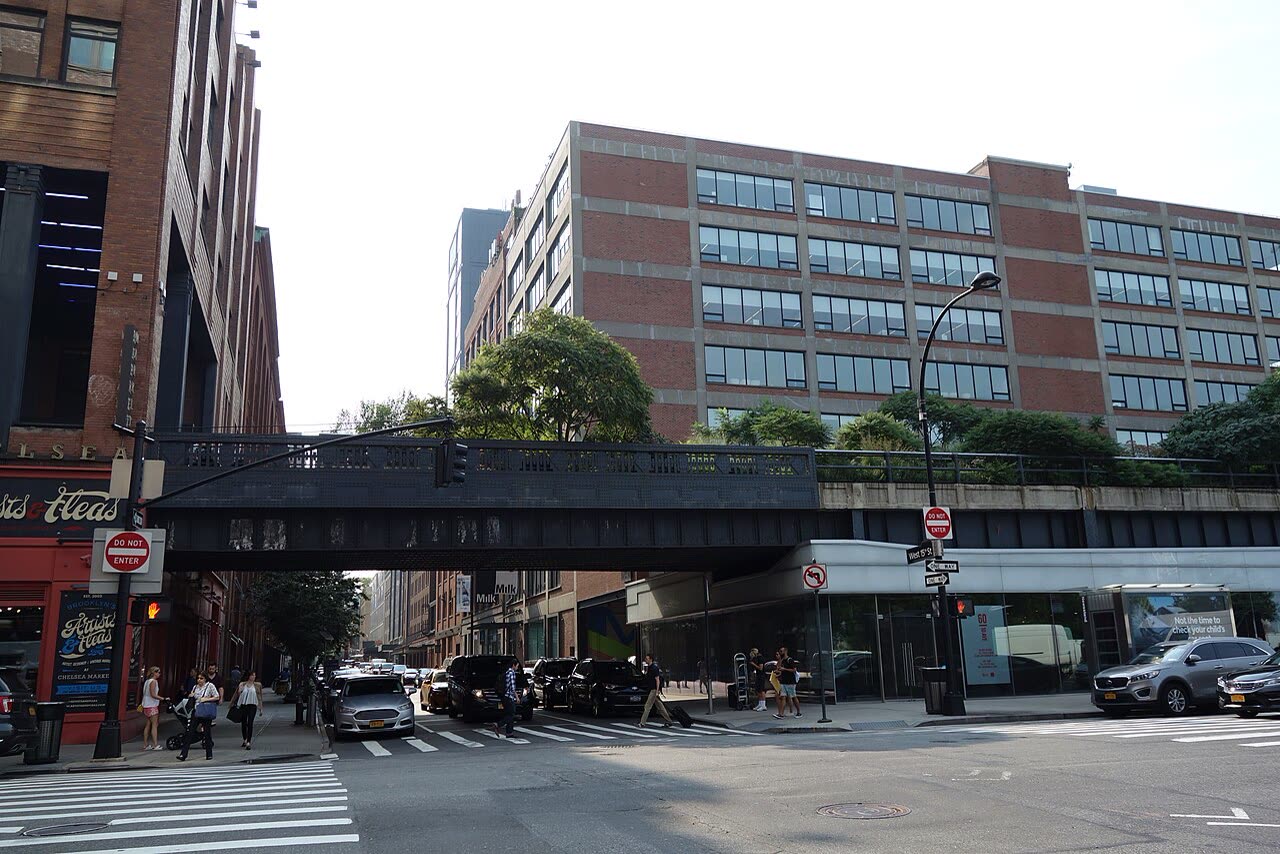
Before you is the High Line, a park on an old elevated railroad. In the nineteenth century, freight trains ran right down the street here. They carried food to Lower Manhattan and often hit people. Tenth Avenue became known as “Death Avenue”: by 1910 more than 540 people had been killed by trains. So the railroad hired men on horseback. The “West Side Cowboys” rode ahead of the trains, waving red flags. Their final ride was in 1941. In 1924 the city decided to take the tracks off the streets. The first train ran on the viaduct in 1933. The line cut straight through buildings, such as the Nabisco biscuit factory, which is now Chelsea Market. Then freight moved to trucks. In the 1960s the southern end was torn down, and by the 1980s the trains had stopped altogether. The story goes that the last train carried three carloads of frozen turkeys. People called the viaduct an eyesore and wanted it gone, but meanwhile a wild garden had grown up on it by itself. In 1999 Joshua David and Robert Hammond founded Friends of the High Line to save it. The first section of the park, from Gansevoort Street to 20th Street, opened in 2009. Today the park runs 1.45 miles, up to 34th Street. The planting was designed by Piet Oudolf, and more than 500 species of plants and trees grow here. Look around: the old rails were lifted during construction and then put back in their original places, and here and there they run beside the path among the plants.
Visiting
The High Line: from Gansevoort Street to 34th Street, between Tenth and Twelfth Avenues. Free entry. Open 7 a.m. to 10 p.m. from April through November, and 7 a.m. to 8 p.m. from December through March. There are stairs at many intersections and elevators at four locations. No bikes, scooters or skates; only service dogs are allowed.
Photos
Sources
- Friends of the High Line — High Line History
- Friends of the High Line — Visit
- Friends of the High Line — Design
- Friends of the High Line — Park Features
- Wikipedia — High Line
This text was written by AI from open sources. Found a mistake? Write to us. Support