Doyers Street
Two hundred feet with a bend that saw Chinese opera, tong wars and a speech by Sun Yat-sen
The story
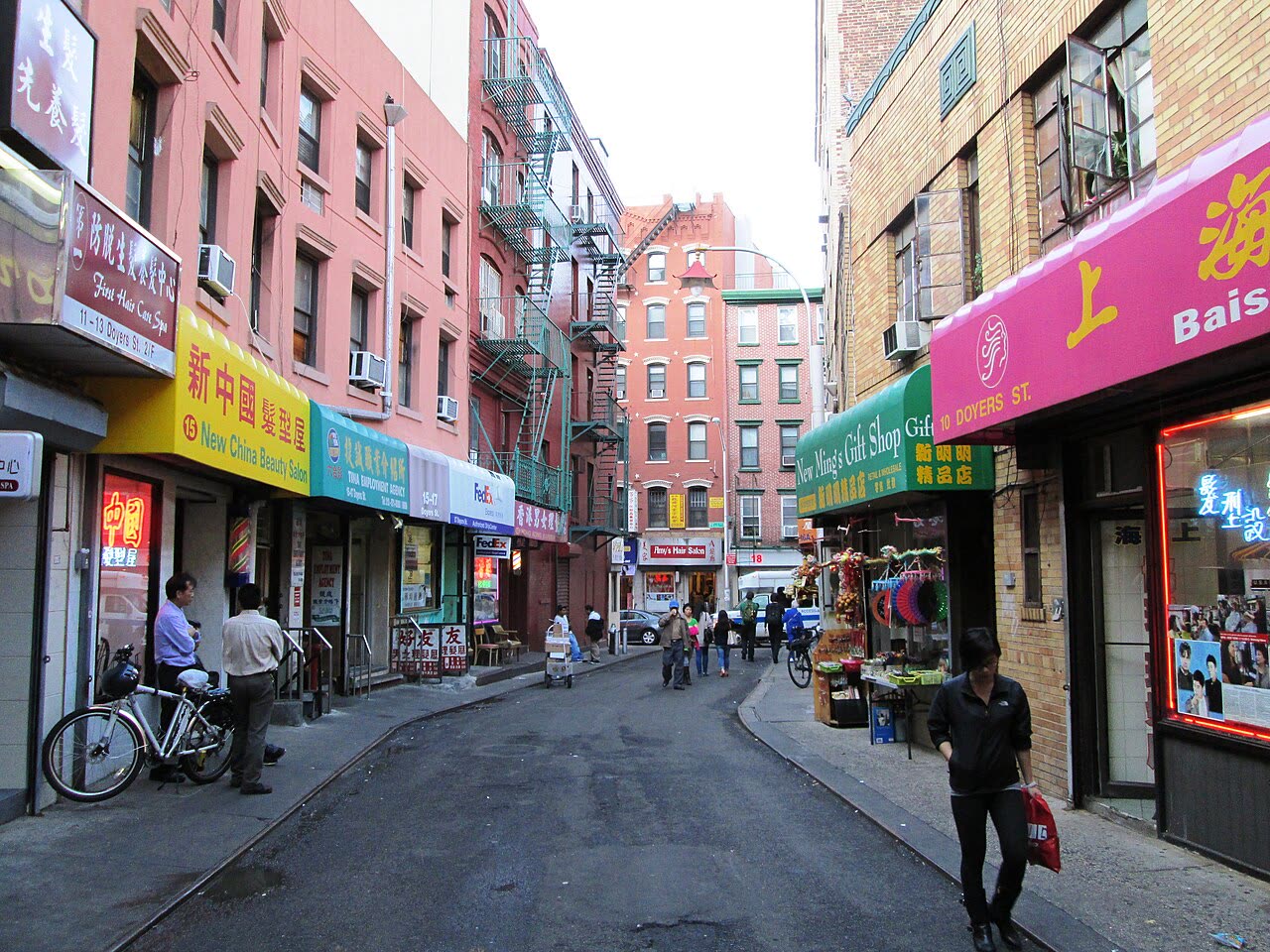
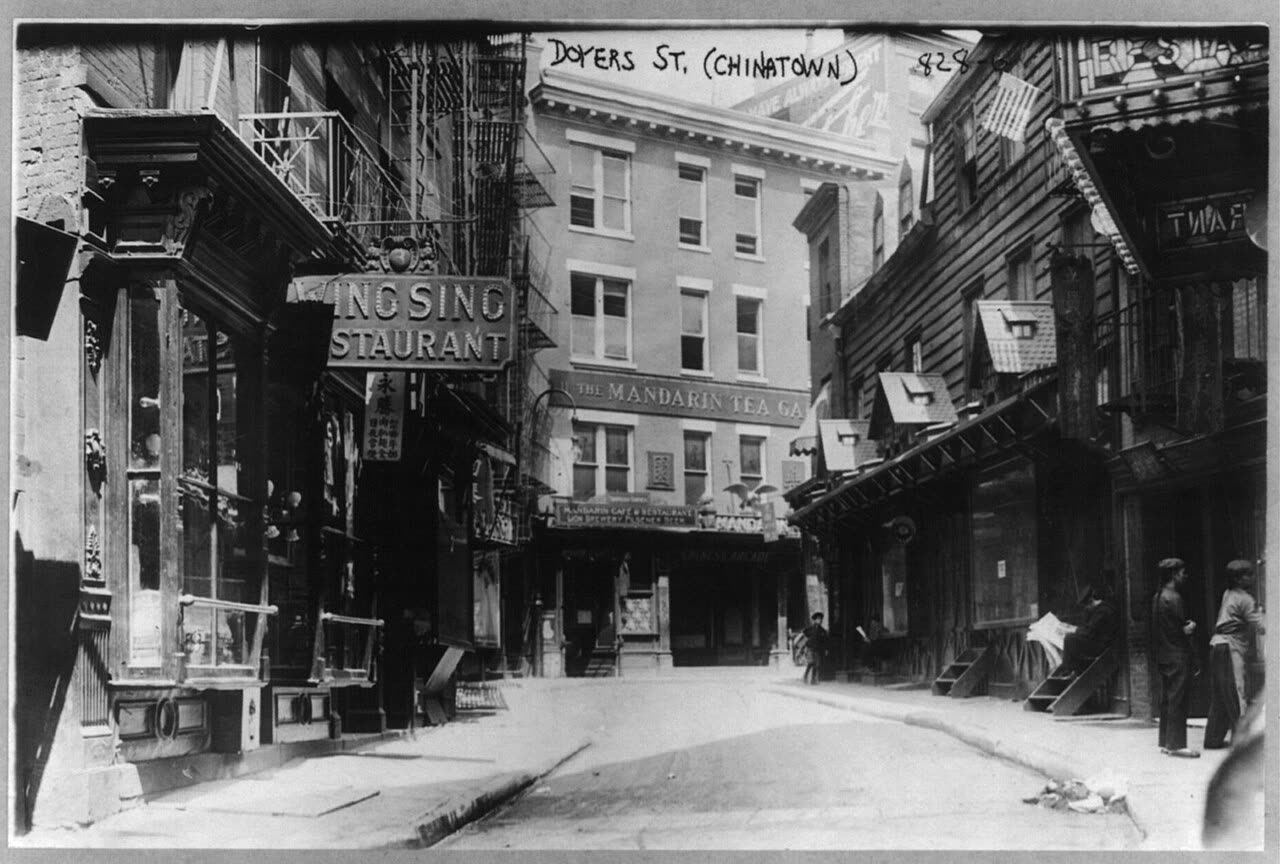
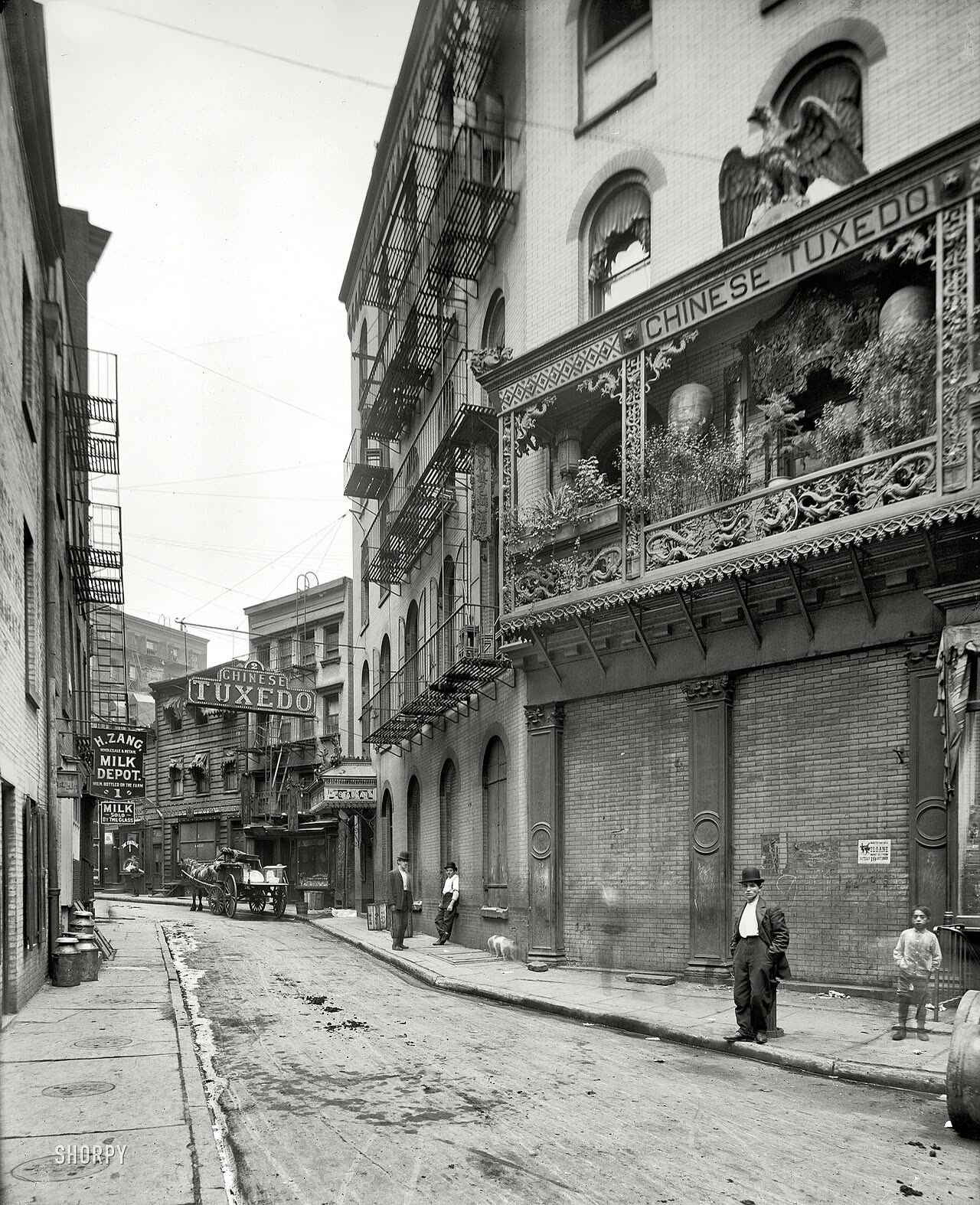
Before you is Doyers Street, just 200 feet long, with a sharp bend in the middle. It is named for a Dutchman, Hendrik Doyers. In 1791 he bought land here and ran a distillery. Later the street became part of Chinatown. In the early 1890s the actor Chu Fong opened a Chinese opera house at number five. The audience was mostly bachelors: an 1882 law had shut Chinese laborers out of America. Chinatown was then divided between two tongs, the On Leong and the Hip Sing. They ran protection rackets and gambling dens and fought each other. In the 1930s Doyers and neighboring Pell Street were Hip Sing territory. Early in the century the bend had already come to be called the “Bloody Angle.” In 1905 shots were fired inside the Chinese theater, and three people died. Soon the performances stopped, and the hall became a mission for the homeless. In 1911 Sun Yat-sen, the founder of the Republic of China, spoke to the people of Chinatown in the former theater. They say the expression “hatchet man,” meaning a hired killer, comes from the tong wars, where hatchets were common weapons. Today Doyers is quiet: barber shops, cafés and a post office. And the Nom Wah tea parlor has been on this street since about 1920, making it the oldest tea parlor still operating in Chinatown.
Visiting
Doyers Street, between Pell Street and the Bowery, next to Chatham Square. The street is always open. The Nom Wah tea parlor is at 13 Doyers Street. There is very little traffic, but the street is narrow, so watch out at the bend.
Photos
Sources
- National Register of Historic Places — Chinatown and Little Italy Historic District (registration form, 2010)
- Wikipedia (EN) — Doyers Street
- Wikipedia (EN) — Columbus Park (Manhattan)
This text was written by AI from open sources. Found a mistake? Write to us. Support