Empire Stores
Among the last of the warehouses that earned Brooklyn the nickname “the walled city”
The story
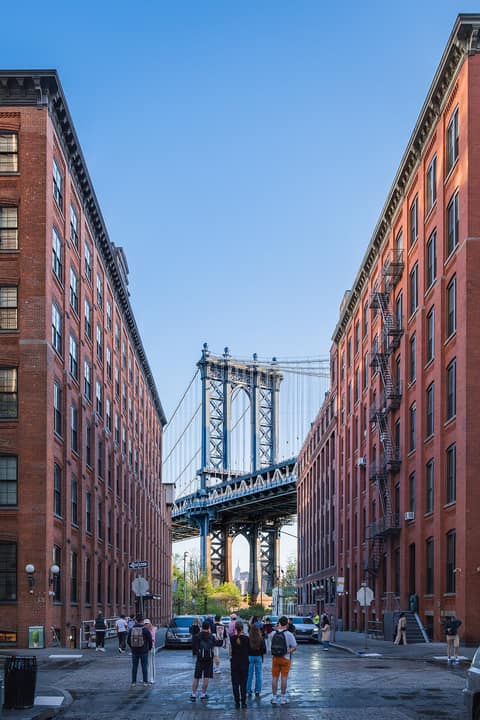
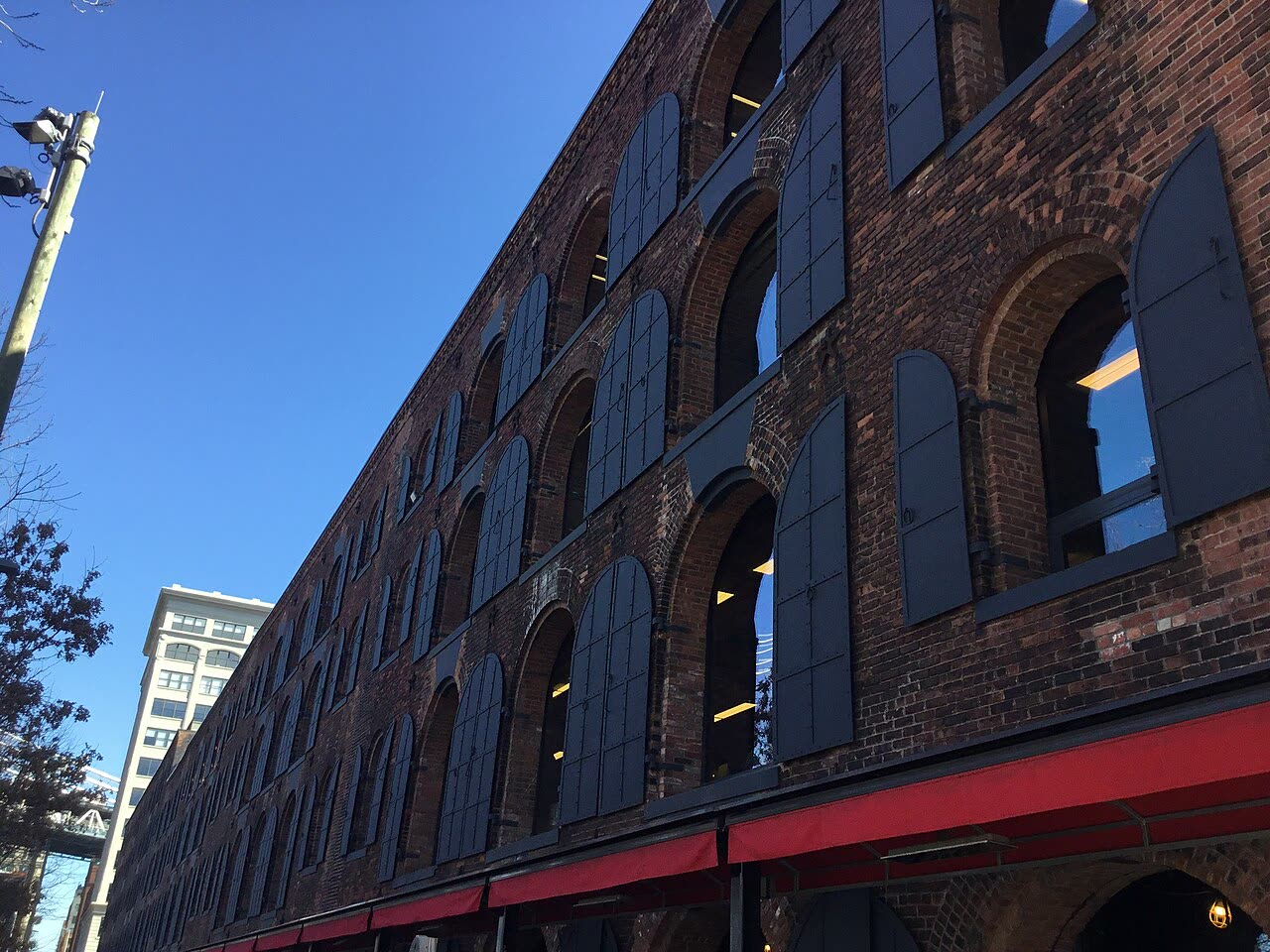
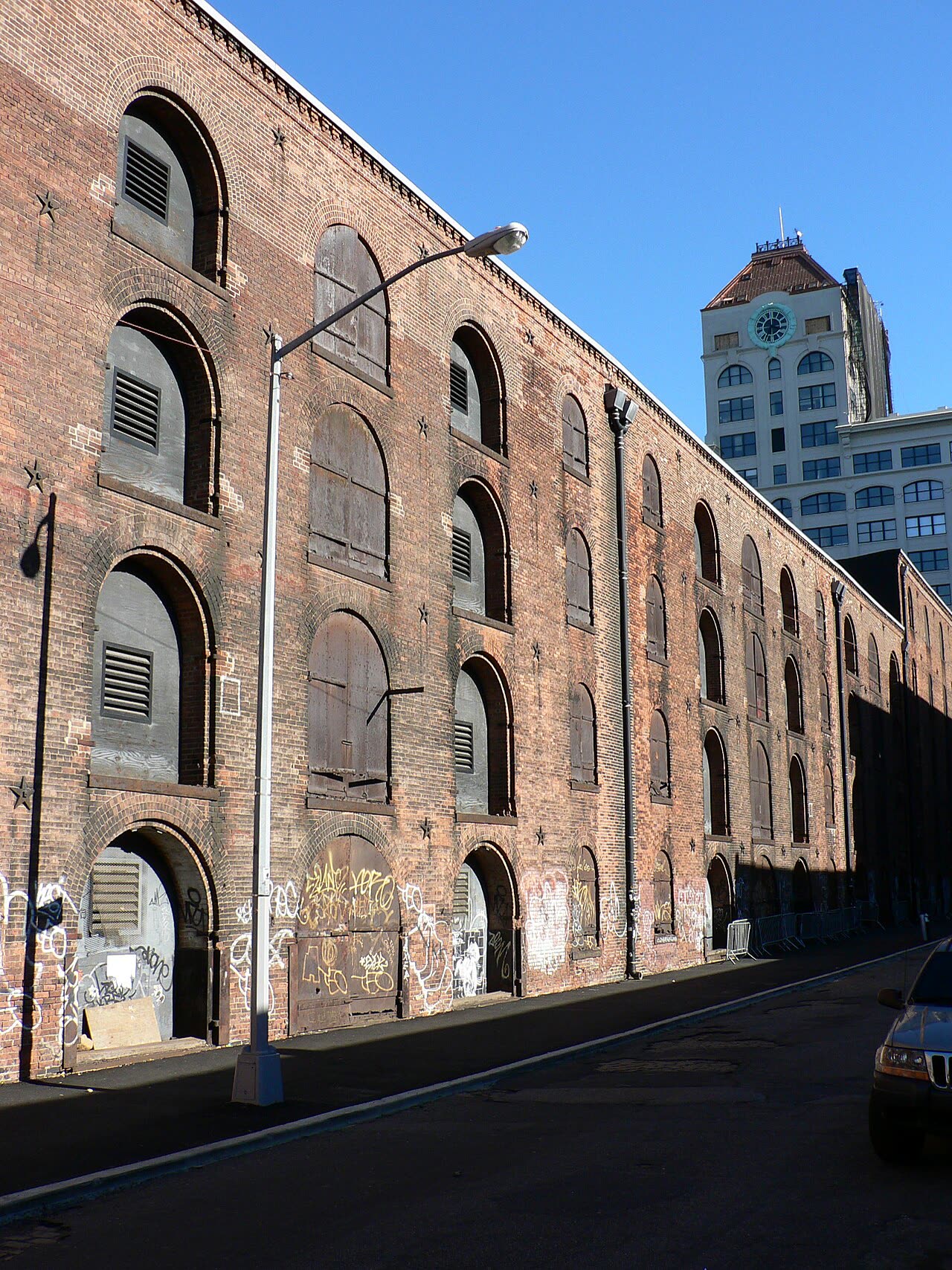
Before you are the Empire Stores, seven brick warehouses that look like one huge building. The land here was bought in 1856 by the shipping merchant James Nesmith. In 1869 the old warehouses burned, and Nesmith built new ones, four stories high. They were finished in 1870 and named Nesmith & Sons’ Empire Stores. In 1885 his son Henry hired the architect Thomas Stone to add one more section, five stories high, at the Main Street end. Look at the rows of arched windows and the heavy iron shutters. Between the floors you can see little metal stars: these are the ends of tie rods that hold the walls together. The thick walls of brick and stone kept the inside dark and cool. Ships from Africa, South America, and Cuba brought coffee beans, hides, grain, raw sugar, and molasses here. In those days warehouses lined the whole Brooklyn waterfront like a wall, and Brooklyn was nicknamed “the walled city.” Next door stood the coffee plant of the Arbuckle Brothers, and their coffee was stored in the Empire Stores. In the 1940s and 1950s many waterfront warehouses were torn down to make way for the expressway and the promenade. In the 1960s these ones emptied too. For decades the buildings stood abandoned. Today they hold shops, offices, restaurants, and a large food hall, and on the roof there is a garden open to everyone, with a view of Manhattan.
Visiting
55 Water Street, Dumbo, by Brooklyn Bridge Park; the York Street subway station is close by. The courtyard and the rooftop garden are free to enter, and there are restrooms on the first floor. Shops and restaurants keep their own hours.
Photos
Sources
- NYC Landmarks Preservation Commission — Fulton Ferry Historic District, Designation Report (1977)
- Brooklyn Bridge Park — Empire Stores
- Wikipedia — Empire Stores
This text was written by AI from open sources. Found a mistake? Write to us. Support