Fulton Ferry Landing
For almost three hundred years a ferry ran from here to Manhattan, and from here Washington’s army slipped away by night
The story
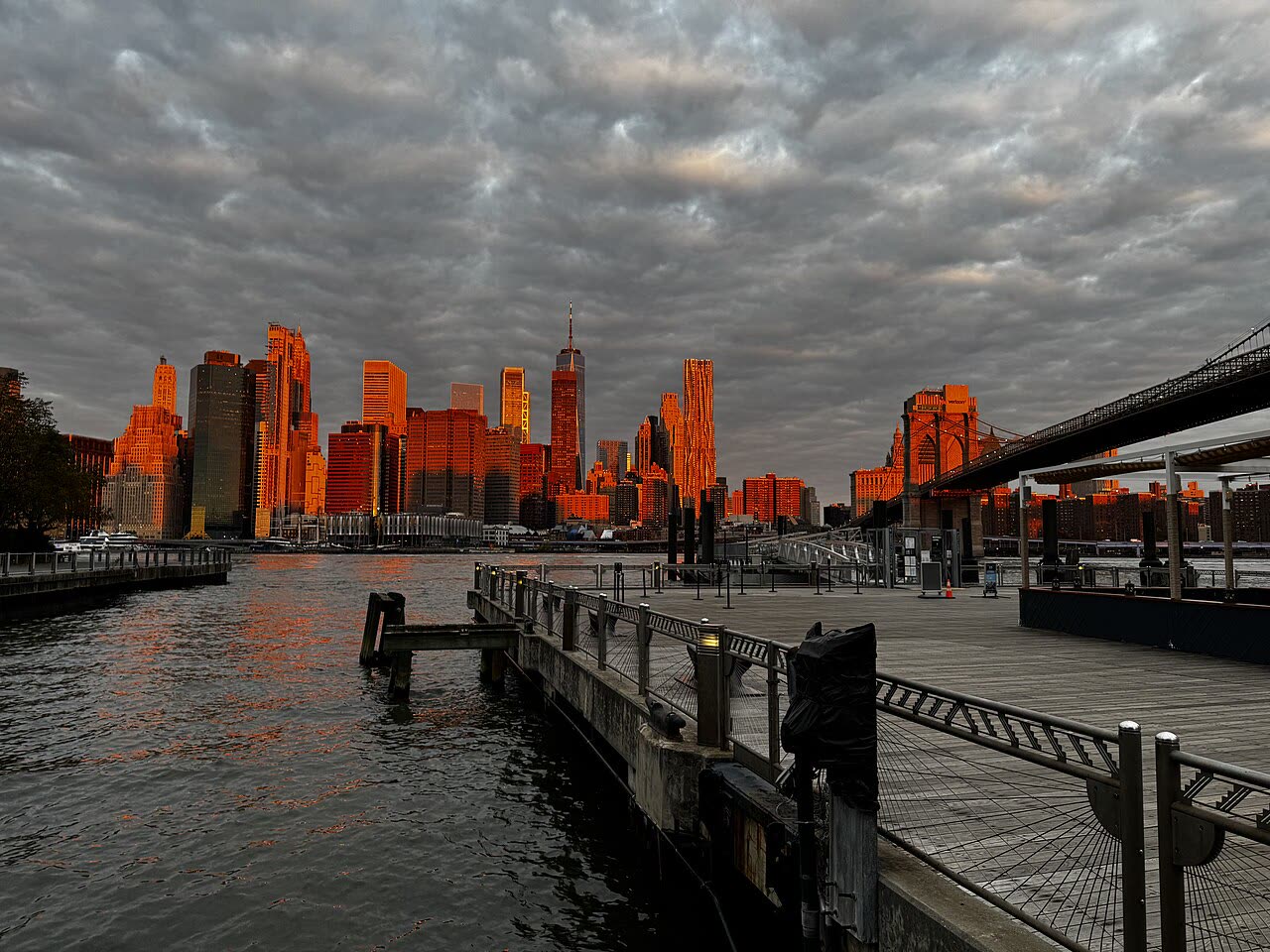
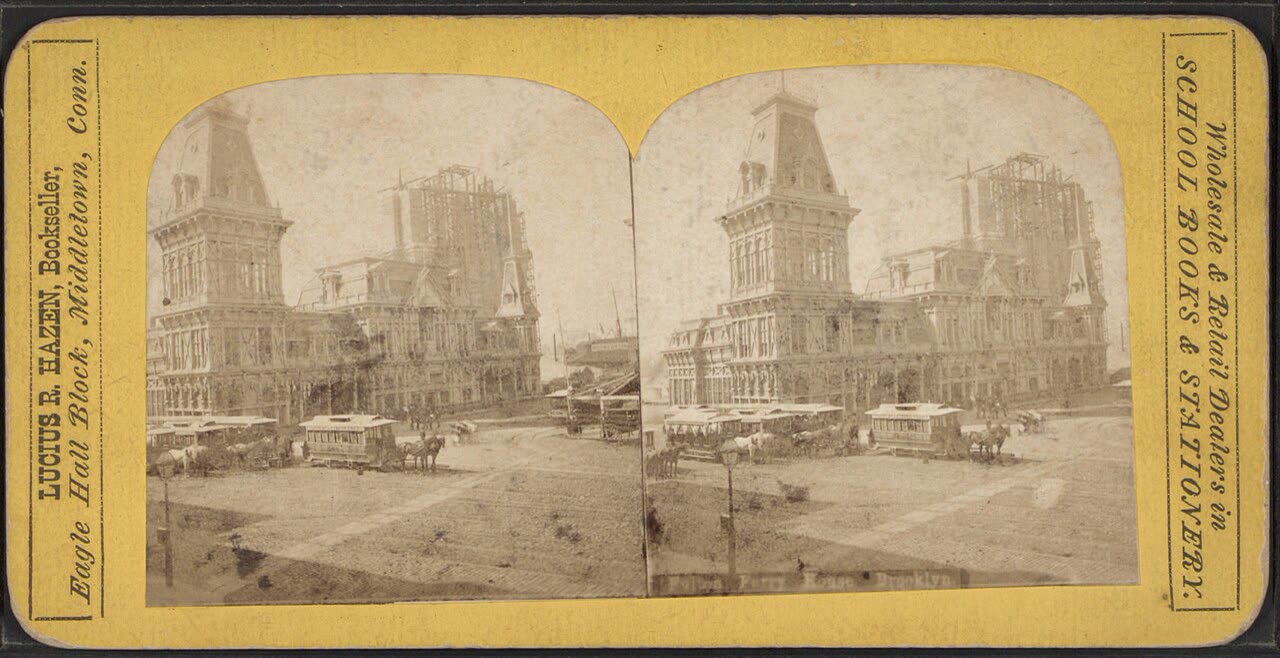
Before you is Fulton Ferry Landing. This is where Brooklyn began. As early as 1642, Cornelis Dircksen, who kept an inn on the Manhattan shore, began rowing people across the East River. The first ferries were rowboats and sailing scows, at the mercy of wind and tide. On the night of the twenty-ninth to the thirtieth of August 1776, after the lost Battle of Long Island, George Washington’s army began its crossing of the river from here. That is how it escaped the British. In 1814 the steam ferry Nassau went into service. The road to the ferry was named Fulton Street, after Robert Fulton. He did not invent the steamboat, but he was the first to make steamboats pay. The crossing took about eight minutes. When work began on the Brooklyn Bridge, the ferries were carrying about fifty million passengers a year. The Brooklyn Eagle newspaper stood on this street. From 1846 to 1848 its editor was the poet Walt Whitman. In 1856 he published a poem about riding the ferry across the East River. Later it got the title “Crossing Brooklyn Ferry.” Lines from it are worked into the railings of the pier. In 1883 the bridge opened, and the ferry was no longer needed. The last run was in 1924, and two years later the ferry house was torn down. The pier was rebuilt and reopened in 1997. Today a ferry calls here again, a city one.
Visiting
The end of Old Fulton Street at Water Street, Brooklyn Bridge Park; the nearest subway stations are High Street and York Street. The park is open daily from 6 a.m. to 1 a.m., free of charge. The NYC Ferry stops here.
Photos
Sources
- NYC Landmarks Preservation Commission — Fulton Ferry Historic District, Designation Report (1977)
- Brooklyn Bridge Park — Fulton Ferry Landing
- Wikipedia — Crossing Brooklyn Ferry
- Wikipedia — Robert Fulton
This text was written by AI from open sources. Found a mistake? Write to us. Support