E. V. Haughwout Building
Elisha Otis’s first passenger elevator started running here in 1857, a step toward the skyscrapers to come
The story
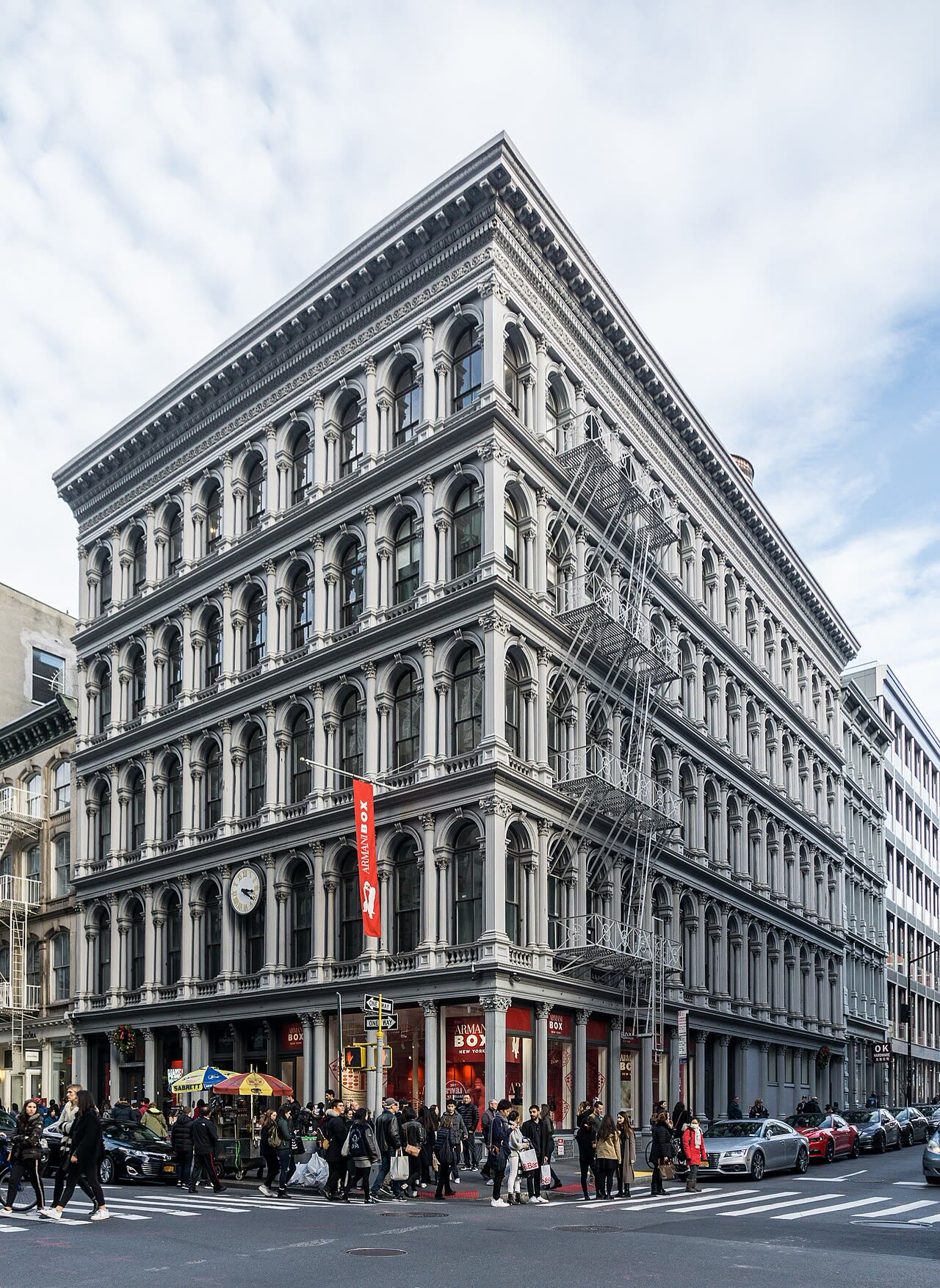
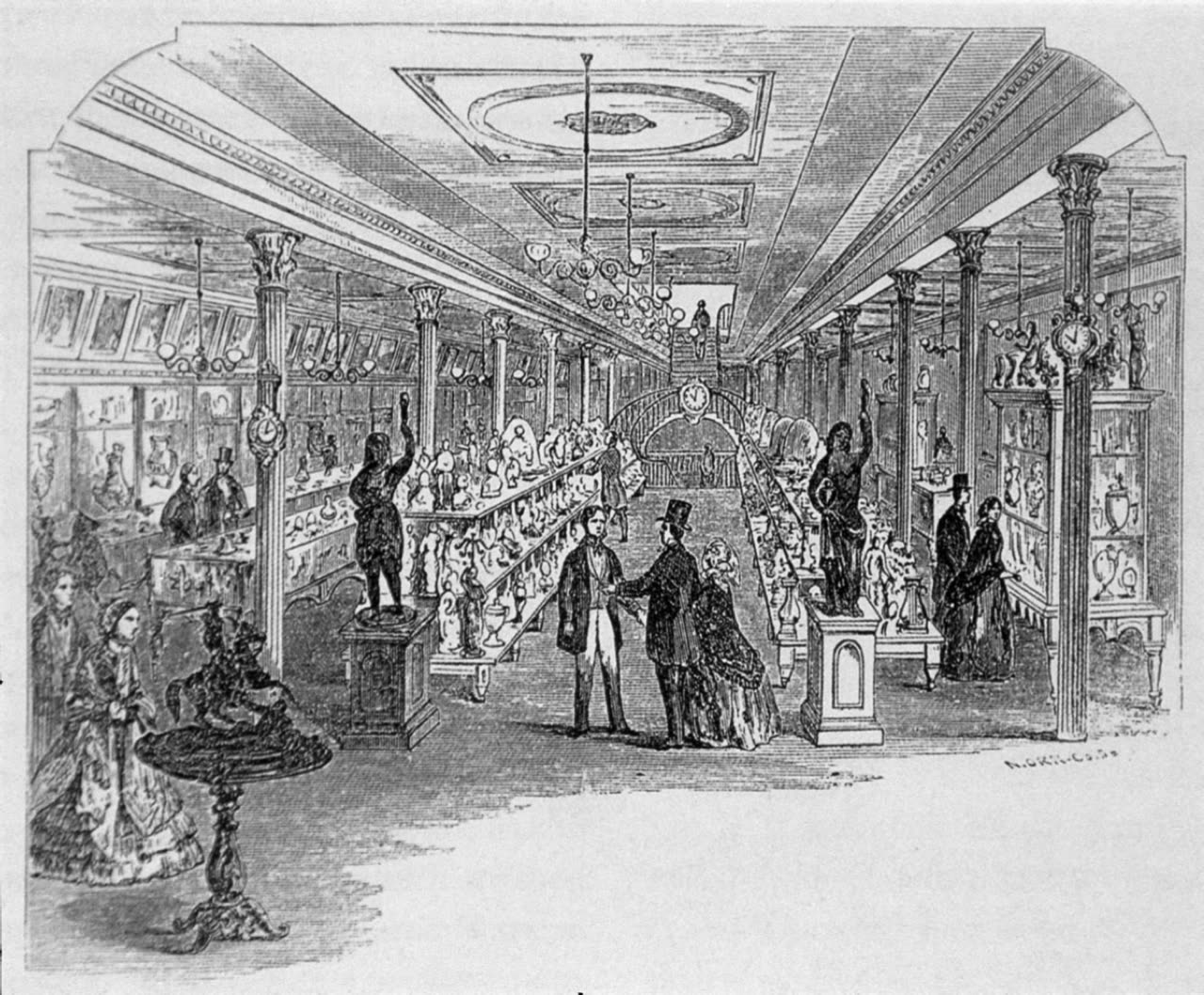
Before you is the Haughwout Building, one of the largest and handsomest cast-iron buildings in New York. It was built in 1857, designed by the architect John Gaynor for Eder Haughwout’s store. It sold cut glass, silver, clocks and chandeliers. Among its customers was Mary Todd Lincoln, the wife of Abraham Lincoln. Both facades, on Broadway and on Broome Street, are assembled from cast-iron parts. The arched windows between the columns recall Sansovino’s famous library in Venice. Facades like these were cast in advance and put together on site, like a kit. But the real wonder was inside. On the twenty-third of March 1857, the first passenger elevator made by Elisha Otis’s company started running here. It was the first store in New York with an elevator built specially for customers. Otis had become famous three years earlier. At an exhibition in New York’s Crystal Palace he stood on a lifting platform and ordered the rope to be cut. The crowd gasped, but the platform dropped only a few inches and stopped: his brake had caught it. “All safe, gentlemen, all safe!” Otis said. His brake kept the car from falling even if the rope broke. In 1965 the city made the building a landmark. At the hearing, speakers said that this building brought together the two things skyscrapers stand on: the metal frame and the elevator. The elevator itself was removed long ago. And in 1995 the columns were repainted in their original color, a quiet grayish brown.
Visiting
488 Broadway, at the corner of Broome Street. There are shops downstairs; the building is best seen from the street, ideally from the opposite corner of the intersection. Subway: the R or W to Prince Street, or the 6 train to Spring Street.
Photos
Sources
- NYC Landmarks Preservation Commission — E. V. Haughwout Building Designation Report
- Otis — Our History
- Wikipedia — E. V. Haughwout Building
This text was written by AI from open sources. Found a mistake? Write to us. Support